The Photograph

On March 18, 1887, prison photographer Arthur Blackwell was ordered to document a final visit at Newgate Prison. Condemned prisoner number 4,729—Michael O’Conor—had been granted thirty minutes with his ten-year-old son before his execution. Regulations allowed a single photograph, taken under guard supervision, in the visitors’ room.
Blackwell had done this many times before. He hated it every time.
Michael O’Conor was seated. His son, Daniel, stood beside him. At the guard’s instruction, their hands were clasped together. Blackwell positioned the camera, adjusted the plate, and warned them not to move.
“Eight seconds,” he said gently.
The shutter opened. Father and son held still—eyes forward, hands locked together—while time itself seemed to hesitate. Then the shutter closed.
Seventy-two hours later, Michael O’Conor was hanged.
Daniel kept the photograph for the rest of his life.
Michael O’Conor had not been born a criminal. He was born in County Cork in 1849, during the worst years of the Great Famine. When he was six, his family fled starvation and crossed to London, settling in Whitechapel among thousands of other Irish refugees. His accent marked him immediately—foreign, poor, suspect.
But Michael was industrious. At fourteen, he apprenticed as a carpenter. By twenty-five, he had a small workshop. By thirty, he was married to Ellen Murphy, a seamstress, and the father of two children: Daniel and Mary.
They were not wealthy, but they were respectable. Rent was paid. Mass was attended. The children were fed, clean, and learning to read.
Then, on January 15, 1887, everything ended.
That evening, Lord Edmund Hartley—a wealthy landowner and Member of Parliament—was attacked in his carriage near Spitalfields. The assailant smashed the window, struck Hartley across the face, and stole a leather case containing sixty pounds and important documents. Hartley suffered a broken cheekbone and severe bruising.
He told police his attacker was an Irishman. A workman. A carpenter.
The next day, Michael O’Conor was arrested.
The case against him appeared airtight. He was Irish. He was a carpenter. He had been working in Spitalfields that evening, delivering furniture. Most damning of all, Lord Hartley identified him in a lineup.
Michael’s defense was simple.
“I didn’t do it.”
He had delivered armwire to Mrs. Thompson’s house. He had left before dark. He had gone home. He had never seen Lord Hartley in his life.
But Mrs. Thompson could not recall the exact time. His wife had been putting the children to bed. No neighbor had noticed him. His court-appointed barrister was young and overwhelmed.
The trial lasted three days. The jury deliberated for forty minutes.
“Guilty.”
Judge Harrison showed no mercy.
“You represent the worst tendencies of your class and kind,” he said. “You are a danger to civilized society.”
Michael O’Conor was sentenced to death.
Ellen screamed. Daniel, ten years old, sat frozen, unable to understand that his father would never come home.
Under prison regulations, condemned prisoners were allowed one final visit with immediate family.
Ellen could not come. She had collapsed after sentencing and was confined to bed, barely coherent. Mary was too young.
So Daniel came alone, accompanied by his aunt Margaret.
He wore his only good suit, already too small. In his pocket was a prayer book his mother had pressed into his hands.
“Tell your father we believe him,” Ellen whispered. “Tell him we’ll never forget.”
At Newgate Prison, Daniel was searched and led through stone corridors into a bare visitors’ room. When Michael was brought in, thinner and pale from weeks without sunlight, his eyes filled when he saw his son.
“Danny,” he whispered.
They were allowed to hold hands.
For twenty minutes they talked of ordinary things—school, Mary, home—as if pretending might keep death away.
Then the photographer arrived.
“Sit here. Hold still,” Arthur Blackwell said.
The camera opened.
After the shutter closed, Daniel spoke.
“Dad,” he whispered. “Did you do it?”
Michael met his son’s eyes.
“No. I swear on your mother’s life, on yours, on Mary’s. I am innocent.”
“I believe you,” Daniel said.
Two days later, Michael O’Conor was hanged at dawn.
Daniel spent sixty-three years believing his father.
The photograph passed down through the family until 1963, when Daniel’s daughter donated it to the Museum of Criminal Justice. For decades, it was catalogued as one more Victorian prison image—sad, but unremarkable.
Until 2019.
That year, the museum began a high-resolution digitization project. Dr. James Fletcher, a photographic conservator, magnified the image far beyond what had ever been possible.
At ten thousand percent, he saw something on Michael O’Conor’s wrist.
A mark.
Not a bruise. Not dirt.
A shackle impression.
But not a Newgate shackle.
It was a Metropolitan Police transport manacle—used only during arrest and early detention.
And it was fresh.
Which meant something impossible.
Michael O’Conor had not been arrested on January 16, as records claimed.
He had been arrested on January 15—the night of the attack.
Dr. Fletcher contacted forensic historian Dr. Patricia Moore. What she uncovered was devastating.
Police logs altered. Witness statements buried. A night watchman’s testimony suppressed. A private letter from Chief Inspector Charles Whitmore admitting the arrest time had been falsified to protect an improper identification conducted while Lord Hartley was injured and disoriented.
Michael O’Conor’s alibi had been destroyed before it could exist.
The photograph—taken as an act of mercy—had preserved the truth for 132 years.
Daniel O’Conor had tried to prove all this during his lifetime. He became a journalist. He investigated wrongful convictions. He petitioned the Home Office.
He failed.
He died in 1950 believing he had failed his father.
But he hadn’t.
In 2019, the truth finally emerged.
In March 2020, 133 years after Michael O’Conor’s execution, the British government issued a posthumous pardon.
“Michael O’Conor was innocent,” it read.
At a memorial at the Old Bailey, his granddaughter placed white roses beneath a plaque bearing his name.
“They finally know,” she whispered.
The photograph now hangs in the Museum of Criminal Justice.
Beneath it, the caption reads:
This image captured evidence that remained hidden for over a century. It reminds us that while justice may fail, truth can endure.
Michael O’Conor held his son’s hand for eight seconds.
It took 132 years for the world to catch up.
But in the end, truth did.
News
El hijo negado de Julio Iglesias: cincuenta años de silencio, poder y una verdad que la ciencia no pudo imponer
Imagínate por un momento que el mundo entero te conoce. Que tu voz suena en cada rincón del planeta, que tu fortuna es tan descomunal que podrías comprar islas enteras y que millones de personas te veneran como a un…
Una soltera en ‘First Dates’ se rebela contra el guion, negándose a revelar una importante información: «Es la única pregunta que no contesto»
Nada más verse las caras, Donio y Karmele tuvieron claro que no llegarían a nada durante la cita. De su cita no les gustó absolutamente nada. A Celedonio ‘Donio’, el Camino de Santiago le cambió la vida. Algo le hizo…

Preguntan a Jordi Évole qué opina sobre la RTVE de Pedro Sánchez y su respuesta es clara: «Dejé de verla durante un tiempo»
El periodista de laSexta no se corta y dice lo que piensa sobre la cadena pública y las recientes acusaciones de ‘mala praxis’ por ofrecer a los ciudadanos un «contenido sesgado» El pasado mes de diciembre, a punto de poner…

Anabel Pantoja, en shock tras el trágico accidente ferroviario de Córdoba: «Venía en el tren justo de antes»
La influencer comparte su conmoción tras el descarrilamiento en Adamuz, donde han muerto al menos 39 personas, y envía un mensaje de apoyo a las víctimas, sus familias y al pueblo volcado en la ayuda. Hay noticias que sacuden al…
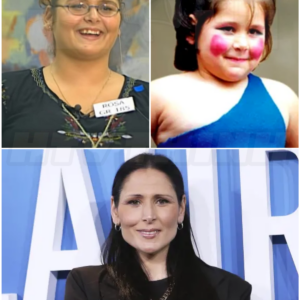
Antes de ser ‘Rosa de España’: la dura infancia de Rosa López y los trabajos que marcaron su vida
Mucho antes del éxito, la cantante ayudaba a su familia a salir adelante entre trabajos precarios, música y una economía siempre al límite. La vida de Rosa López dio un giro radical en 2001, cuando cruzó por primera vez la…
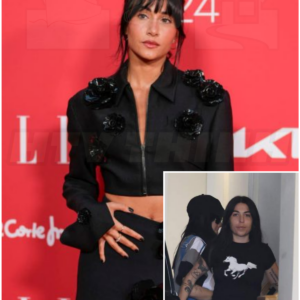
La asistente personal de Aitana abandona el barco antes de comenzar su gira mundial
Según ha informado ‘Look’, su mano derecha ha decidido afrontar otros proyectos lejos de la artista catalana. Dicen que la ruptura ha sido amistosa, aunque llega en un momento inoportuno para la cantante. La cantante catalana Aitana se ha quedado…
End of content
No more pages to load