The Scapegoat: Unraveling the Shadows of DJ Warras’ Murder
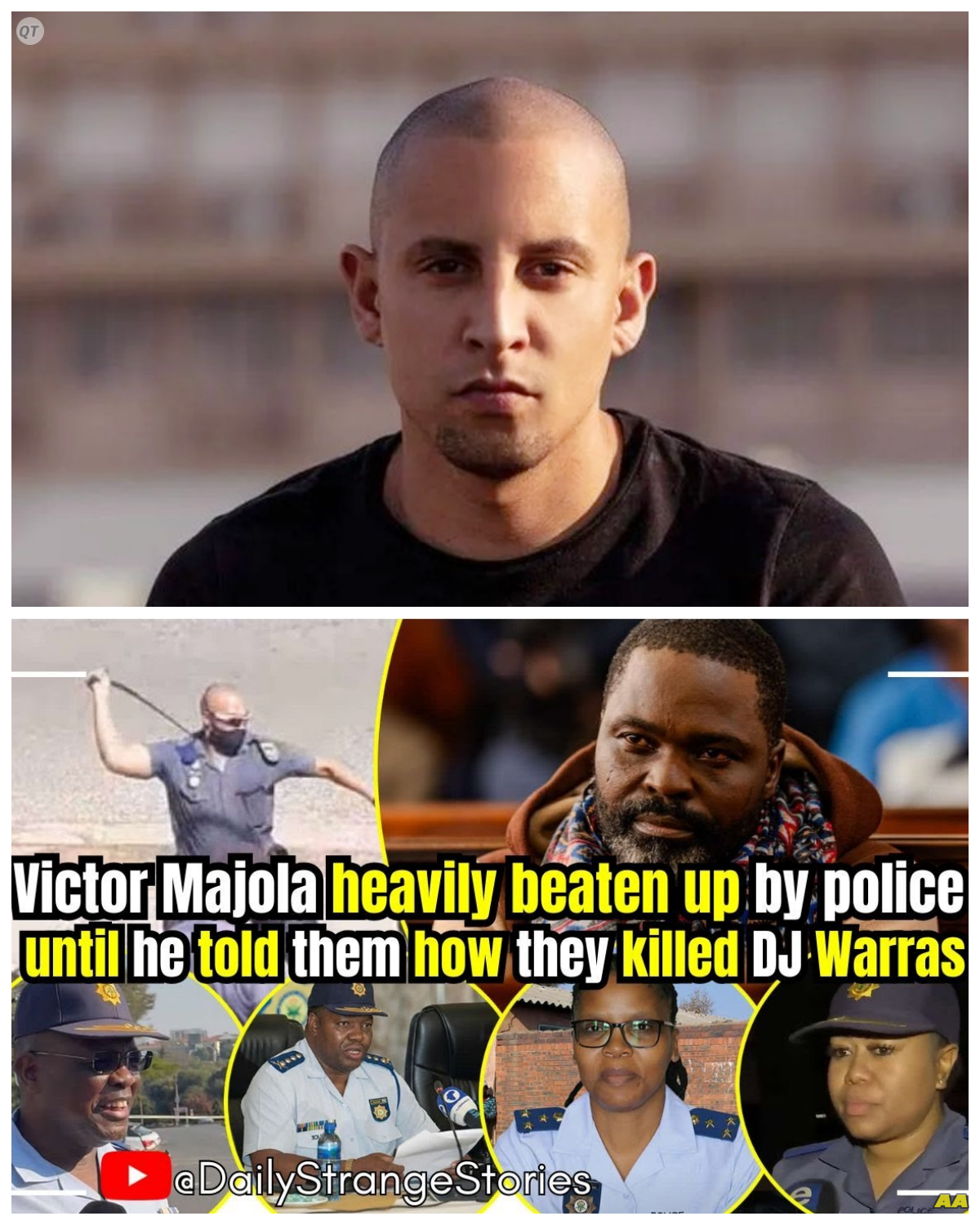
In the heart of Johannesburg, a storm was brewing, one that would send shockwaves through the city and expose the dark underbelly of corruption and deceit.
The murder of DJ Warrick Stock, known as DJ WARRAS, had sent ripples of fear and confusion through the community.
As the sun set on that fateful night, the sound of gunfire echoed through the streets, marking the end of a vibrant life and the beginning of a complex web of lies.
The police, desperate for answers and under immense pressure to solve the case, quickly turned their attention to Victor Mthethwa Majola, a man who would soon find himself at the center of a scandal that would engulf the entire city.
Majola, a resident of Merafe Hostel, was arrested in the early hours of the morning, his life turned upside down by accusations that he had orchestrated the hit on DJ WARRAS.
As the police stormed the hostel, they treated him not as a suspect but as a criminal.
Witnesses would later describe the scene—officers bursting through the door, dragging Majola from his bed, fists flying as they demanded confessions.
The brutality of the arrest was shocking, leaving Majola battered and bruised, a stark reminder of the lengths to which the police would go to secure a conviction.
In the days that followed, the narrative began to unfold.
Brigadier Athlenda Mathe and Brigadier Brenda Muridili held press conferences, painting Majola as the mastermind behind the murder.
They claimed that he had the motive and the means to execute such a professional hit, but the details were murky at best.
CCTV footage was presented, showing two men approaching DJ WARRAS moments before his life was taken, but the evidence was far from conclusive.

Majola’s attorney, Dumisani Mabunda, fought tirelessly to prove his client’s innocence, arguing that the police were more interested in closing the case than in finding the truth.
As the investigation progressed, it became clear that the real story was far more complicated.
DJ WARRAS had been a vocal opponent of the hijacking of inner-city buildings, a battle that had put him at odds with powerful syndicates profiting from the illegal industry.
His efforts to reclaim these properties had made him a target, and many speculated that his murder was orchestrated by those who stood to lose the most.
The Johannesburg MMC for Public Safety, Dr. Mgcini Tshwaku, confirmed that WARRAS was indeed the target of a professional hit, raising the question of whether Majola was simply a scapegoat in a much larger conspiracy.
As the community watched the events unfold, doubts began to surface.
Could a man like Victor Majola, with no prior criminal record, truly be capable of funding such a heinous act?
The conditions at Merafe Hostel, a place marked by poverty and desperation, painted a different picture.
Majola was not a criminal mastermind; he was a man trying to survive in a system that offered little hope.
The police’s heavy-handed tactics only fueled the narrative that they were more interested in maintaining control than seeking justice.
As the trial approached, tensions mounted.
Majola found himself facing a legal system that seemed rigged against him, his fate hanging in the balance as the prosecution painted him as the villain.
But Mabunda refused to back down, determined to uncover the truth behind the allegations.
He began to dig deeper, uncovering connections between the police and the very syndicates that had targeted DJ WARRAS.
The evidence began to paint a different picture—one of corruption, collusion, and a desperate need for a scapegoat to quell public outrage.
In a shocking turn of events, Mabunda discovered that the woman arrested alongside Majola, believed to be his wife, was also a victim of circumstance.
Her arrest had been a calculated move by the police to further implicate Majola, and as Mabunda fought to clear his client’s name, he realized that the stakes were much higher than he had anticipated.
The whispers of corruption within the police force grew louder, as testimonies began to emerge from those who had witnessed the events surrounding DJ WARRAS’ murder.
A former officer, who wished to remain anonymous, revealed that Majola had been targeted not for his actions but for what he represented—a threat to the powerful syndicates that controlled Johannesburg.
As the trial began, the courtroom was filled with tension, the air thick with anticipation.
Majola sat at the defendant’s table, his expression a mix of fear and determination.
He knew that the truth was on his side, but the system seemed stacked against him.
The prosecution presented their case, relying heavily on shaky evidence and coerced confessions obtained through violence.
But as Mabunda took the stand, he began to dismantle the prosecution’s narrative piece by piece.
He presented evidence of DJ WARRAS’ threats against powerful figures, painting a picture of a man who had become a target in a deadly game of power and greed.
The courtroom was captivated as Mabunda revealed the connections between the police and the criminal underworld, highlighting the lengths to which they would go to protect their interests.
As the trial progressed, the tide began to turn in Majola’s favor.

Witness after witness came forward, contradicting the prosecution’s claims and shedding light on the corruption that had plagued the investigation.
The atmosphere shifted, and for the first time, there was a glimmer of hope for Majola.
But just as it seemed that justice might finally prevail, tragedy struck.
The night before the verdict was to be announced, Mabunda received a chilling message warning him to back off or face dire consequences.
He knew that the threats were real, and as he prepared for the final day of the trial, he felt the weight of the world on his shoulders.
In the courtroom, the tension was palpable as the judge prepared to deliver the verdict.
Majola sat in silence, his heart racing as he awaited the decision that would determine his fate.
Finally, the moment arrived, and the judge’s voice echoed through the room.
In a shocking twist, the judge declared Majola not guilty, citing insufficient evidence and the clear signs of police misconduct.
The courtroom erupted in chaos, a mix of relief and disbelief washing over the crowd.
Majola was free, but the battle was far from over.
As he left the courthouse, the reality of the situation began to sink in.
He was a free man, but the scars of his experience would remain forever etched in his mind.
The true masterminds behind DJ WARRAS’ murder still roamed free, hidden in the shadows of corruption.
Majola knew that the fight for justice was not just about him; it was about exposing the truth and holding those in power accountable.
As he walked away from the courthouse, he vowed to continue the fight, to ensure that the voices of the oppressed were heard.
In the aftermath of the trial, the community began to rally around Majola, recognizing him as a symbol of resilience in the face of injustice.
The story of DJ WARRAS and the corruption that had led to his death became a rallying cry for change, igniting a movement that demanded accountability and transparency.
As the sun set over Johannesburg, Majola stood at the forefront of a new battle, ready to confront the darkness that had plagued his city for too long.
The shadows of justice had begun to lift, and the promise of a brighter future was within reach.
In the end, the fight for truth and justice was far from over, but Victor Mthethwa Majola had emerged as a beacon of hope, a reminder that even in the darkest of times, the light of resilience could shine through.